Send Your Request
Fill in the form below and our team will get back to you shortly.
Your message has been received.
Our team will respond to your request as soon as possible.
Products
Arosha Powder manufactures and exports uncoated calcium carbonate powder produced from selected natural limestone for industrial formulations that benefit from the untreated surface of ground calcium carbonate. After grinding and classification, the powder is supplied without stearic-acid surface treatment, allowing buyers to evaluate a naturally hydrophilic GCC filler for water-based, cementitious, mineral-rich and other compatible systems.
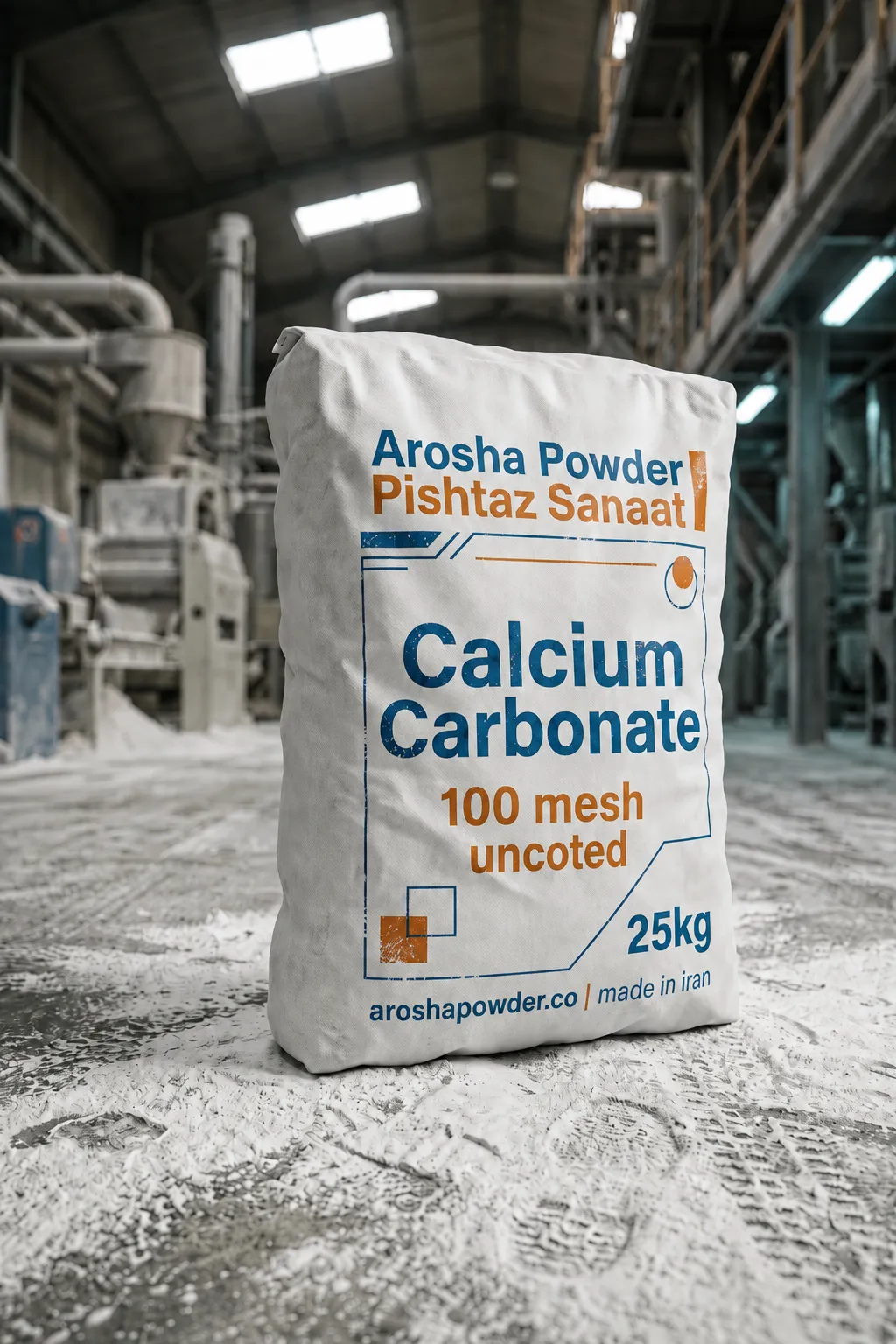
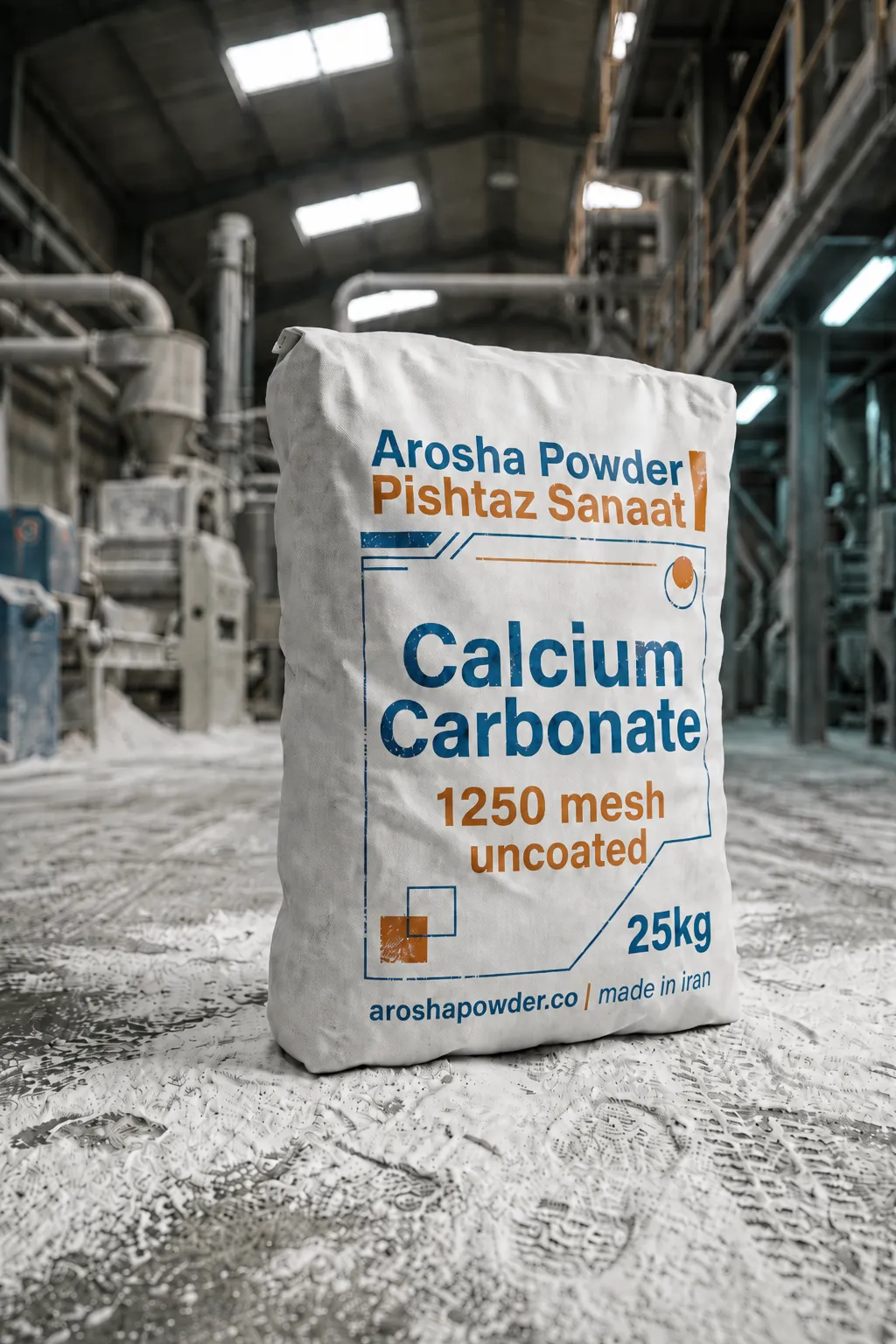
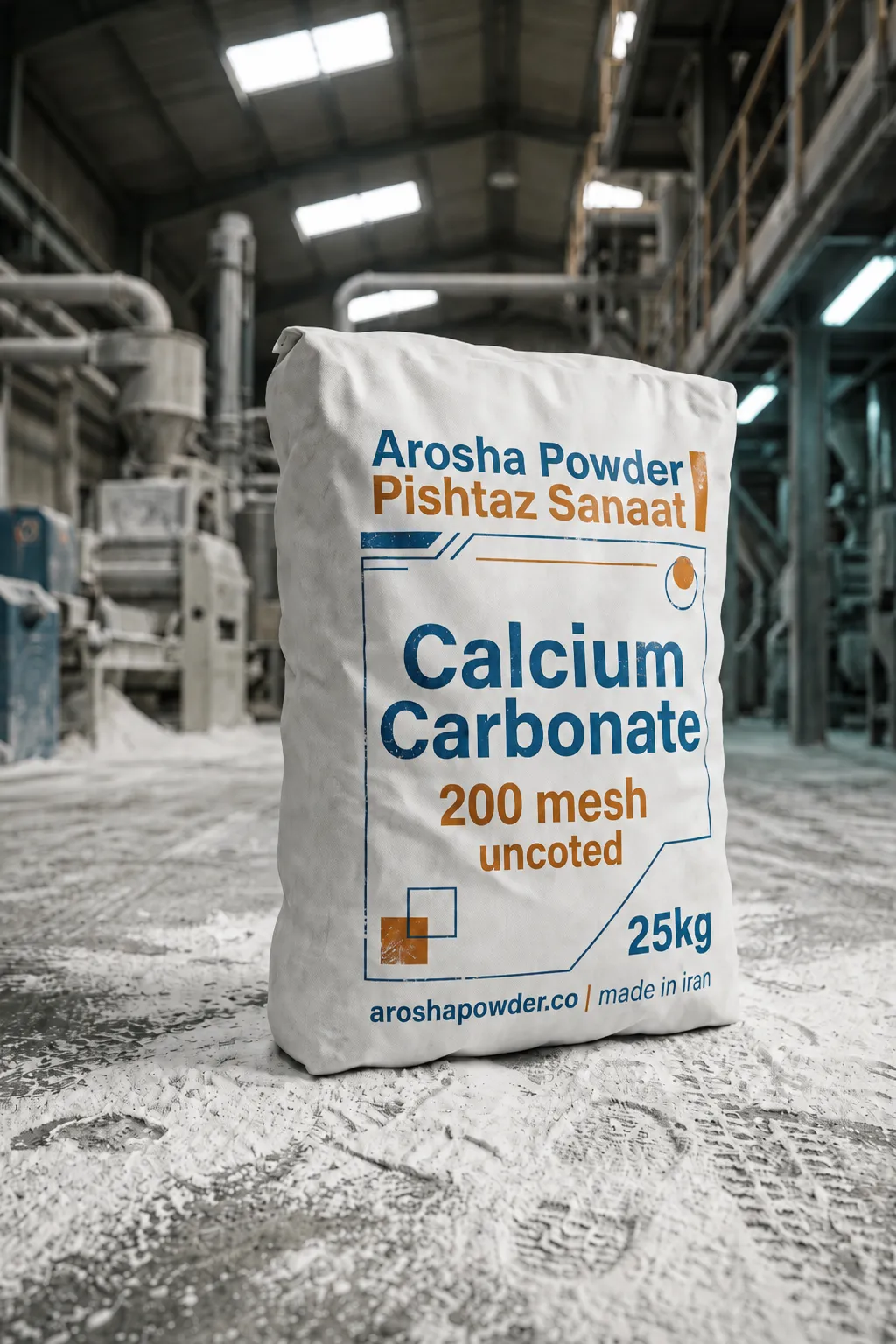
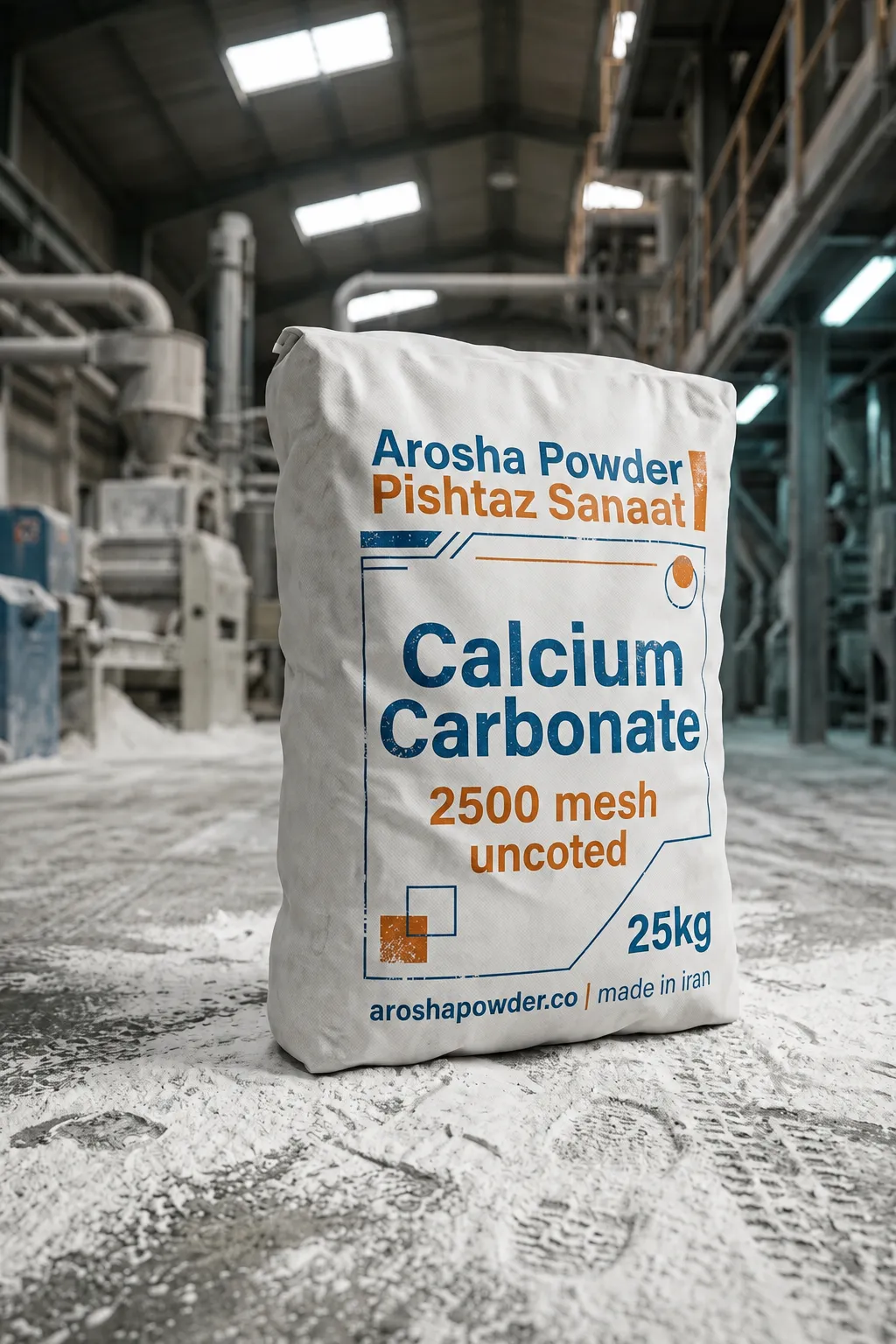
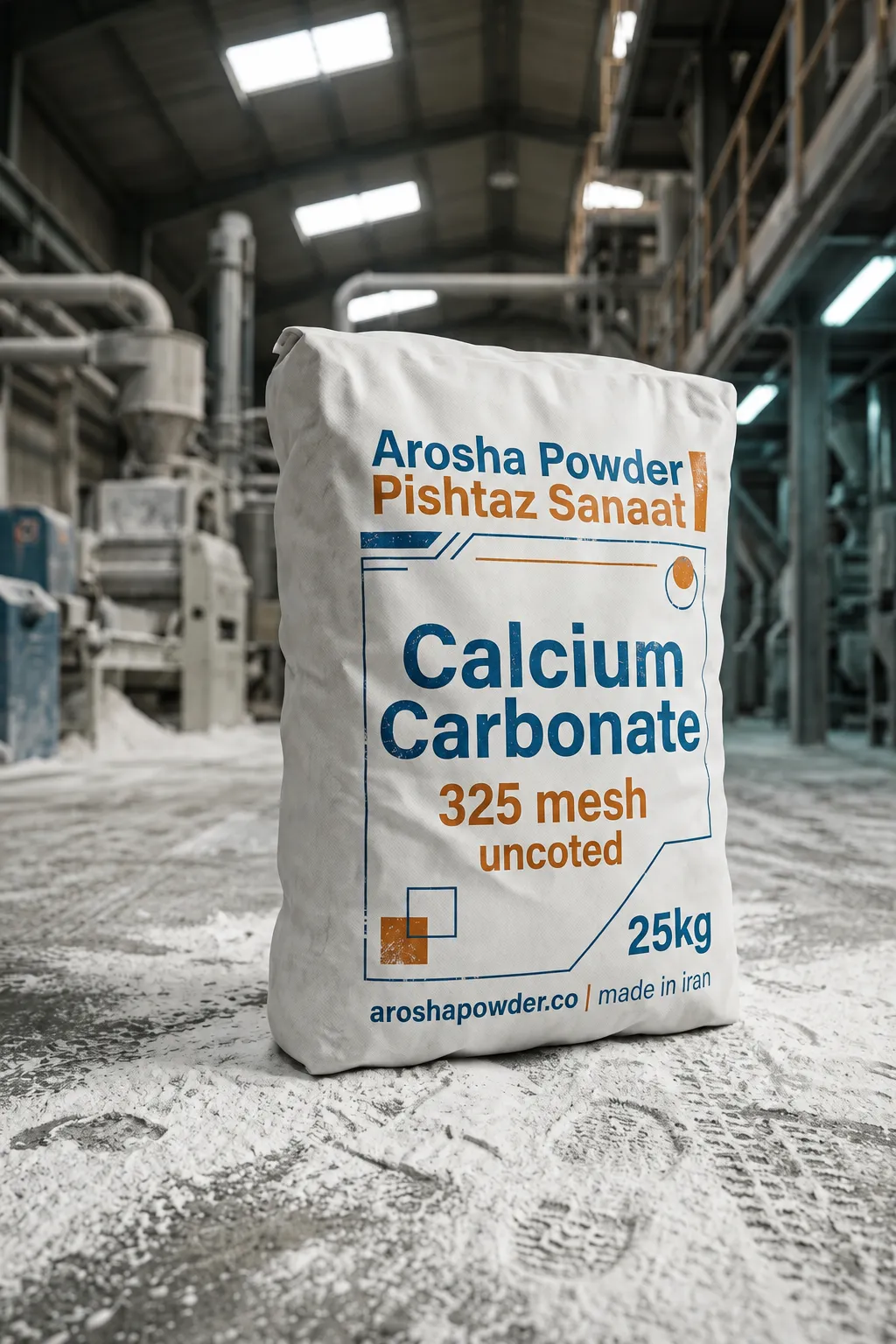
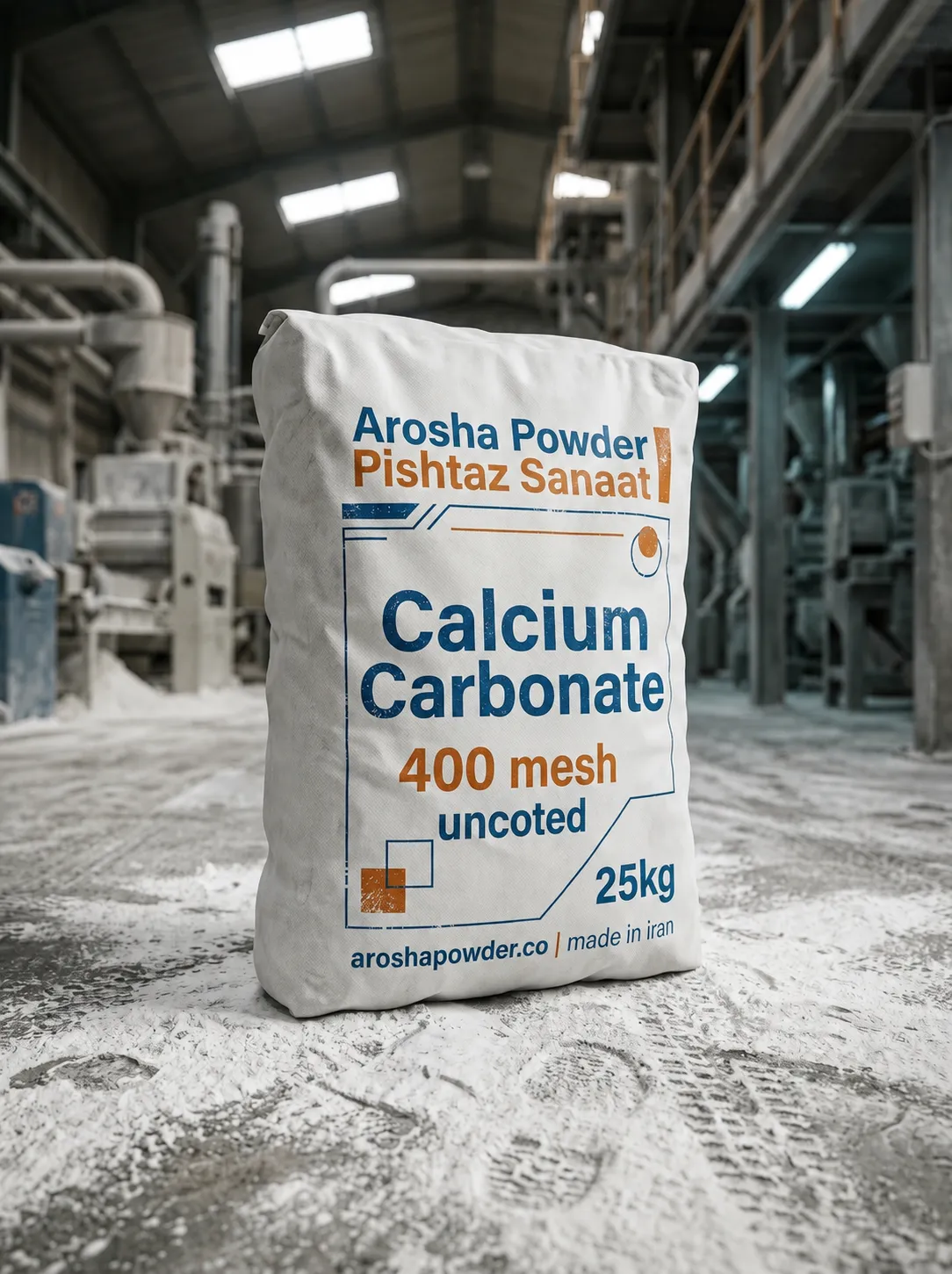
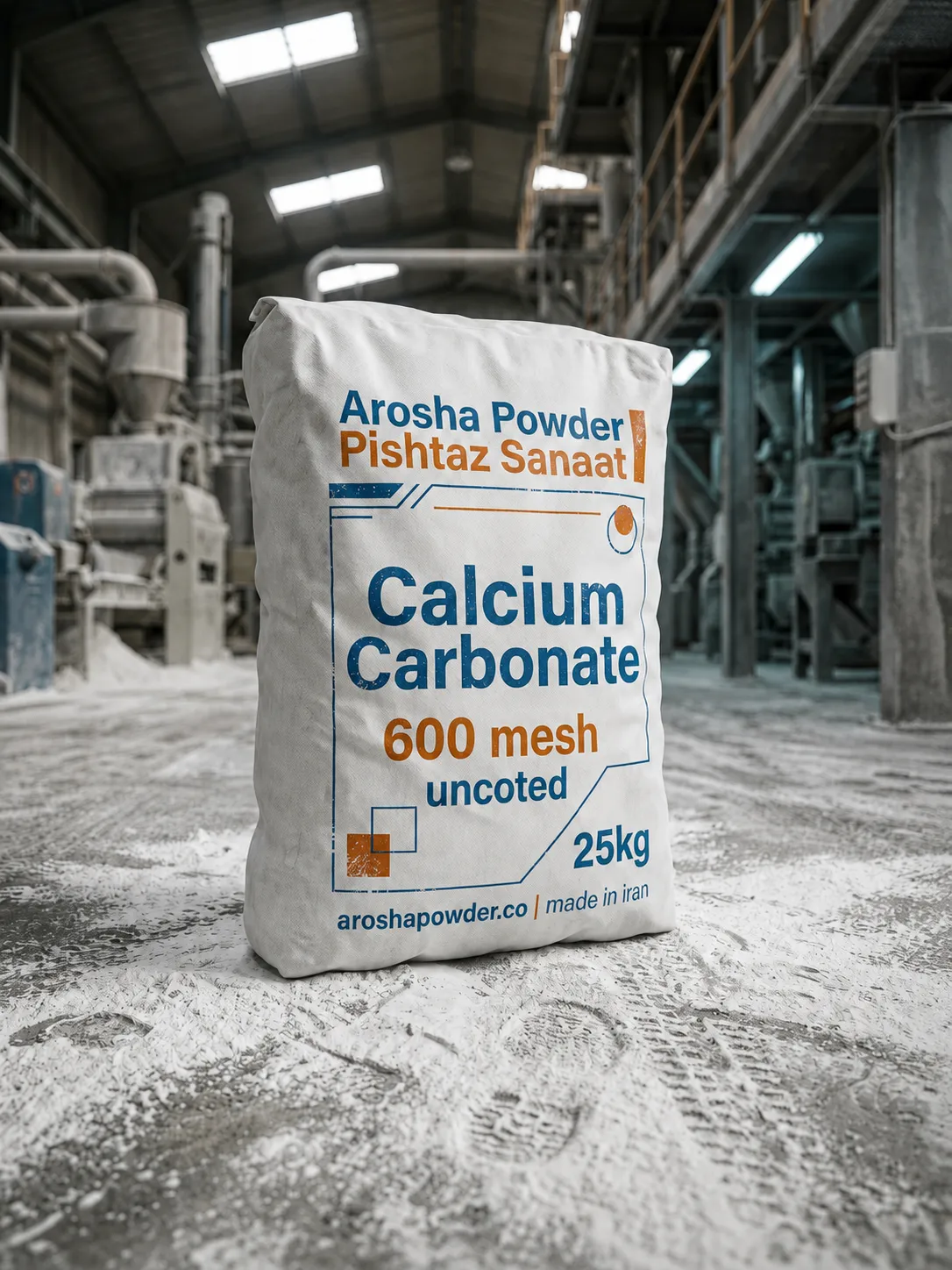
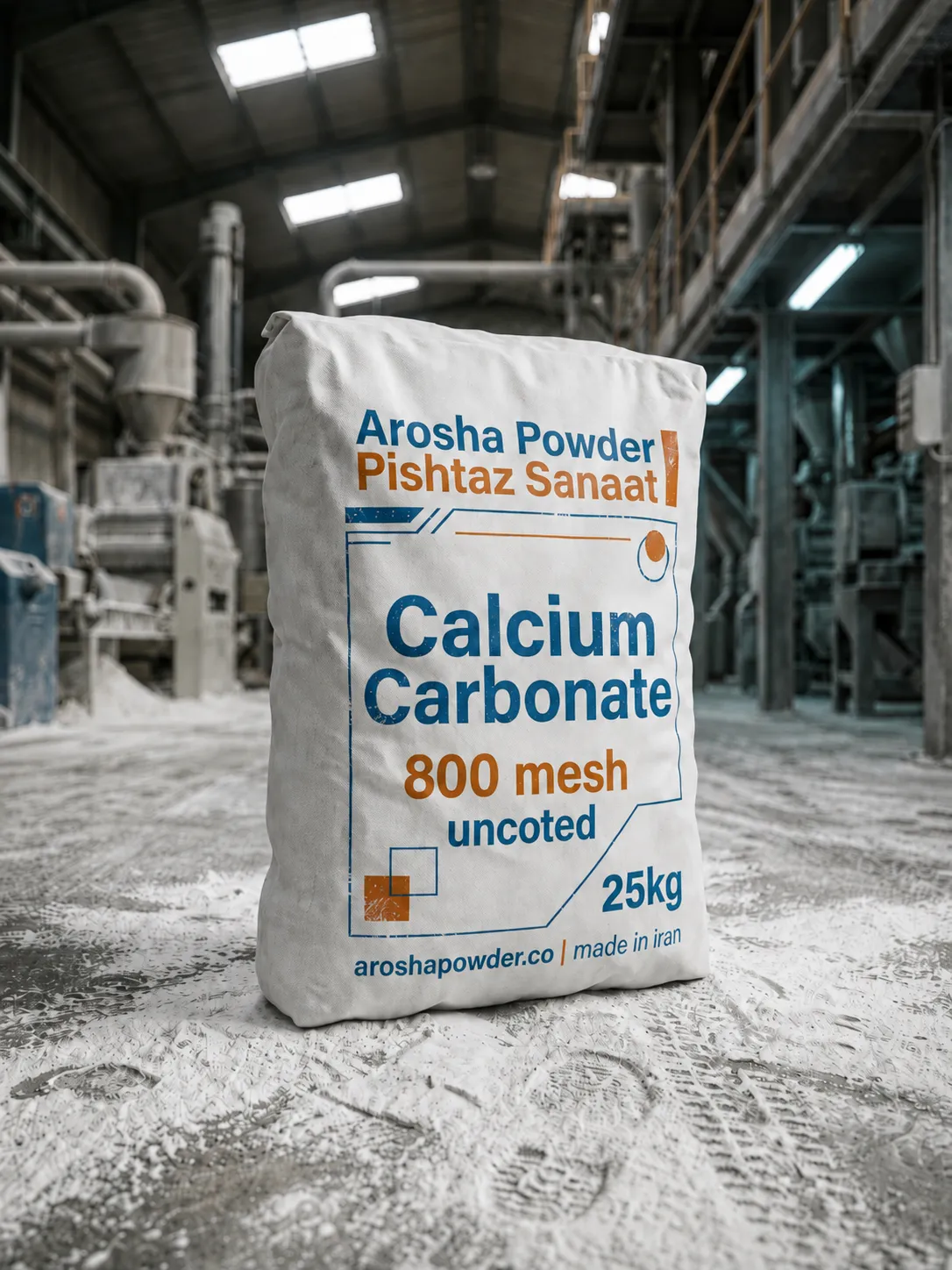
Our uncoated GCC portfolio includes 100, 200, 325, 400, 600, 800, 1250 and 2500 Mesh grades. These products can be evaluated for wall putty, dry mortar, tile adhesives, primers, paints, adhesives, sealants, ceramics, paper and board, cleaning products, general rubber goods and selected plastic or PVC compounds. Buyers can compare adjacent grades, request grade-specific technical data sheets, qualify samples and receive batch documentation for commercial orders.
| Find the Right Uncoated Grade | Request an Export Quote |
Uncoated calcium carbonate is natural ground calcium carbonate (GCC) that has not received an intentional organic surface treatment such as stearic acid. The mineral is extracted from limestone, ground to the required fineness and classified according to a commercial mesh or particle-size specification. The product remains calcium carbonate throughout the process; “uncoated” describes its surface condition, not a different chemical composition.
The untreated surface of calcium carbonate is naturally hydrophilic and polar. This is often a practical advantage in water-based coatings, cementitious materials, ceramic systems and other formulations that already interact well with a mineral surface. In hydrophobic polymer matrices, the same untreated surface may require different mixing conditions or a lower filler loading than a coated grade.
Uncoated does not mean low quality, and coated does not mean universally superior. The correct choice depends on whether surface treatment creates a measurable benefit in the buyer’s matrix. Particle-size distribution, purity, whiteness, moisture, impurities, oil absorption, bulk density and batch consistency remain important regardless of surface treatment.
H3: Uncoated GCC Category at a Glance
| Category Attribute | Description |
| Product family | Natural ground calcium carbonate (GCC) |
| Surface treatment | None – no intentional stearic-acid coating |
| Surface behavior | Naturally hydrophilic / polar mineral surface |
| Primary functions | Filler, extender, pigment, mineral fraction and formulation-cost optimizer |
| Available grades | 100, 200, 325, 400, 600, 800, 1250 and 2500 Mesh |
| Strong application pathways | Construction compounds, paints, putties, adhesives, paper/board, ceramics and cleaners |
| Conditional pathways | PVC, plastics, rubber, agriculture, feed and regulated uses |
| Approval basis | Grade-specific TDS, representative sample and batch-specific COA |
Many wall putties, dry mortars, tile adhesives, plasters, primers, water-based coatings and mineral formulations do not require a hydrophobic surface treatment. In these systems, untreated GCC can integrate into the mineral or aqueous phase without adding a coating that may offer little technical value. The final result still depends on binder chemistry, additives, water demand and the complete particle-packing design.
A selected particle-size distribution can fill voids between larger solids, build body, influence rheology and reduce reliance on higher-cost binder or pigment components. Coarser grades tend to support economical bulk filling, while finer grades can improve surface refinement and distribution. The correct balance must be validated in the finished formulation rather than assumed from mesh name alone.
Surface treatment adds a functional step and should be chosen only when it solves a real compatibility or processing problem. When the buyer’s matrix already accepts the natural mineral surface, an uncoated grade may provide a simpler and commercially efficient starting point. Total formulation cost, however, should be judged through production trials; the lowest purchase price does not automatically produce the lowest cost in use.
Arosha Powder supplies a broad uncoated mesh range so industrial buyers can balance fineness, surface finish, powder handling, mineral packing and material cost. The table below is a starting-point guide. It does not replace the approved TDS, particle-size distribution or production trial for the selected product.
| Grade | Relative Position | Typical Starting Applications | Selection Note |
| 100 Mesh | Coarse | Heavy construction fillers, screeds, textured compounds and bulk mineral loading | Start here when economy and coarse mineral structure are more important than a smooth finish. |
| 200 Mesh | Coarse to medium | Dry mixes, wall putty, general rubber goods and cost-driven industrial filling | A practical step above 100 Mesh when improved uniformity is needed without fine grinding. |
| 325 Mesh | Balanced medium-fine | Wall putty, tile adhesives, joint compounds, primers, sealants and general compounds | Useful middle position when 200 Mesh is too coarse but very fine GCC is unnecessary. |
| 400 Mesh | Medium-fine | Smoother putties, coatings, adhesives, rubber and selected plastic compounds | Choose when improved finish and dispersion justify greater fineness. |
| 600 Mesh | Fine | Decorative paints, sealants, paper/board, smoother construction compounds and selected polymers | Evaluate when a more refined surface and tighter particle profile are required. |
| 800 Mesh | Fine to very fine | Refined coatings, adhesives, paper, board and selected plastic or rubber formulations | A stronger starting point for finer finish, subject to handling and viscosity requirements. |
| 1250 Mesh | Very fine | High-finish coatings, specialty sealants, paper/board and selected compound applications | Use where optical and surface requirements justify the finer profile. |
| 2500 Mesh | Ultra-fine / specialty | Premium coatings, selected inks, high-surface-finish formulations and specialty compounds | Choose only when the application benefits from very fine particles and can control dust, rheology and dispersion. |
Buyer decision point: Mesh is a nominal fineness designation, not a complete particle-size specification. Before approving a grade, compare D50, D97, sieve residue, top cut, whiteness, moisture, chemical purity and the test method reported on the TDS or batch COA.
| Compare All Uncoated Grades | Send Your Current TDS for Grade Matching |
Uncoated GCC is most valuable when the natural mineral surface is compatible with the formulation. The application descriptions below identify practical starting points, not universal approvals. Product qualification should be based on the selected mesh grade, complete formulation and final performance requirements.
Uncoated calcium carbonate can provide mineral body, support spreadability and help control formulation cost in wall putty, skim coat, joint filler and repair compounds. Coarse-to-medium grades are common for economy and build, while medium-to-fine grades are considered when sanding behavior and surface smoothness are more important. Water demand, cracking resistance, adhesion and finish should be tested in the complete recipe.
In dry-mix construction products, GCC can function as a controlled mineral fraction alongside cement, sand, polymers and cellulose ethers. The grade may influence particle packing, consistency, sag resistance and applied texture. Buyers should select the mesh range according to the required layer thickness, workability, open time, adhesion and final surface rather than using one fineness for every product.
Calcium carbonate is widely evaluated as an extender and mineral pigment in primers, putties, textured coatings, architectural paints and selected industrial coatings. Particle size and optical properties influence gloss, opacity, scrub behavior, viscosity and surface appearance. Coarser grades are generally more suitable for textured or undercoat systems, while finer grades are the stronger starting point for smoother decorative and industrial finishes.
In compatible acrylic, PVA, water-based and general-purpose adhesive or sealant systems, uncoated GCC can add body, adjust rheology and improve formulation economics. Filler loading and fineness should be optimized for pumpability, extrusion, slump, storage stability, adhesion and cured appearance. Hydrophobic, reactive or high-loading systems should also be compared with a coated grade.
Fine and very fine GCC can be used as a mineral filler or pigment in selected paper and board processes. The required grade depends on brightness, abrasion, particle-size distribution, retention chemistry, machine configuration and whether the mineral is used in the sheet or in a surface coating. Standard mesh labels alone are not enough for paper qualification, and high-quality coating systems may require highly controlled GCC, slurry products or PCC.
Uncoated calcium carbonate can be evaluated in selected ceramic bodies, glazes and mineral formulations as a calcium-bearing raw material or controlled filler. Iron, silica, magnesium and insoluble matter may affect color, firing behavior and finished properties. The buyer should approve the chemical profile and firing response for the specific ceramic process.
Selected uncoated grades can provide mineral filling, body or controlled cleaning action in powdered cleaners and detergent-related products. The correct fineness depends on desired abrasiveness, dissolution behavior of the complete formulation, surface sensitivity and dust requirements. Consumer or regulated claims require separate product and safety review.
Untreated GCC may be used in selected rigid PVC, flexible PVC, thermoplastic and rubber compounds where filler loading is moderate and the process can accommodate the natural mineral surface. It can also serve as a general mineral filler in mats, footwear, molded rubber items and similar products. For high filler loading, demanding polymer wetting, reduced moisture sensitivity or tighter processing consistency, buyers should compare the uncoated grade with coated calcium carbonate.
Industrial uncoated calcium carbonate must not automatically be presented as agricultural, feed, food or pharmaceutical grade. These applications require separate documentation for chemical purity, heavy metals, microbiology, traceability and destination-specific regulatory compliance. A standard industrial TDS is not evidence of approval for regulated use.
| Application | Category Fit | Typical Starting Range | Qualification Note |
| Wall putty / skim coat | High | 200-600 Mesh | Balance body, sanding, water demand and surface finish |
| Dry mortar / tile adhesive | High | 100-400 Mesh | Match layer thickness, packing and workability |
| Primers / textured coatings | High | 325-800 Mesh | Control viscosity, opacity and texture |
| Decorative / smoother coatings | Medium to high | 600-2500 Mesh | Optical values and top cut control selection |
| Water-based adhesives / sealants | High to medium | 325-1250 Mesh | Validate rheology, extrusion and storage stability |
| Paper / board | Conditional | 600-2500 Mesh | Process, abrasion and optical requirements are decisive |
| Ceramic bodies | Medium to high | 100-600 Mesh | Control chemistry and firing behavior |
| Cleaning products | Medium | 200-800 Mesh | Match abrasiveness and surface sensitivity |
| General rubber goods | Medium | 200-800 Mesh | Test mixing, hardness, elongation and finish |
| PVC / plastics | Conditional | 400-2500 Mesh | Compare coated grades for hydrophobic matrices and high loading |
| Food / feed / pharmaceutical | Not standard | Separate compliant grade | Industrial category must not imply regulatory approval |
Uncoated and coated calcium carbonate are not interchangeable labels for the same buying decision. Surface treatment should be selected only when it creates a measurable benefit in the buyer’s formulation. The table below summarizes the most important differences.
| Selection Factor | Uncoated GCC | Coated GCC |
| Particle surface | Natural hydrophilic / polar surface | Organic surface treatment, commonly stearic acid |
| Strong starting matrices | Water-based, cementitious, ceramic and compatible mineral systems | Hydrophobic polymer and elastomer systems |
| Typical buying objective | Mineral filling, body, packing, optical adjustment and cost control | Improved polymer wetting, dispersion and processing at suitable loading |
| Common applications | Putty, mortar, paint, adhesives, paper, ceramics and cleaners | PVC, masterbatch, PE/PP, cable, rubber and artificial leather |
| Key approval data | PSD, purity, whiteness, moisture, impurities, bulk density and COA | The same data plus treatment level, activation, coating quality and surface behavior |
| Main risk if misselected | Poor wetting or inconsistent processing in a hydrophobic matrix | Unnecessary treatment cost or reduced compatibility in a water-based/mineral system |
| Best decision method | Review TDS, sample and production trial | Review TDS, treatment data, sample and production trial |
Choose uncoated calcium carbonate when the formulation accepts the natural mineral surface and surface treatment does not provide a useful technical benefit. Compare it with coated GCC when the filler must disperse into a hydrophobic matrix, filler loading is high, moisture behavior is critical or the process requires improved polymer wetting and consistency.
| Explore Coated Calcium Carbonate | Ask for a Coated vs Uncoated Recommendation |
A mesh number is not enough to qualify a calcium carbonate supplier. The purchasing specification should define the properties that affect the buyer’s process and finished product.
| Approval Area | What to Confirm |
| Particle-size distribution | D50, D97, sieve residue, top cut and test/dispersion method |
| Chemical composition | CaCO3 purity, MgO, SiO2, Fe2O3 and insoluble matter |
| Optical properties | Whiteness, brightness and color values where relevant |
| Moisture | Maximum moisture and storage/packaging controls |
| Handling properties | Loose/tapped bulk density, powder flow, aeration and dust behavior |
| Formulation properties | Oil absorption, pH, rheology and abrasion where applicable |
| Surface status | Confirmation that the grade is uncoated and has no intentional stearic-acid treatment |
| Documentation | Approved TDS, SDS, batch-specific COA, sample identification and test methods |
| Commercial controls | Packaging, labeling, MOQ, lead time, Incoterms, destination and inspection terms |
For repeat production, use an approved purchasing specification and compare each shipment with a batch-specific Certificate of Analysis. When two suppliers use the same mesh name, do not assume that particle distribution, brightness, moisture or processing behavior will be identical.
Arosha Powder’s quality process begins with raw-material selection and continues through grinding, classification, packaging and batch verification. Order-critical parameters should be linked to the agreed specification for the selected grade rather than to a universal category table.
Available documentation may include a grade-specific Technical Data Sheet, Safety Data Sheet, particle-size information, chemical analysis, optical-property data and a batch-specific Certificate of Analysis. Buyers can also request a representative sample for laboratory or production qualification, subject to destination and quantity.
A COA is valid only for the identified production batch. Generic templates or sample certificates should not be treated as shipment documents. Custom technical limits may be considered for repeat or volume orders after laboratory and production feasibility review.
| View Technical Data Sheets | Request a Sample and Batch COA |
Uncoated calcium carbonate can be supplied in industrial packaging selected according to product fineness, order volume, destination, handling equipment and buyer requirements. Bag weight, inner liner, jumbo-bag configuration, palletizing, private labeling, container loading, minimum order quantity, lead time and Incoterms should be confirmed in the quotation for the selected grade.
Store the powder indoors in a dry, covered area. Keep packaging closed and protect it from rain, condensation and direct contact with wet floors. Finer grades may aerate and generate more airborne dust, so handling systems should use appropriate extraction, housekeeping and personal protective equipment.
To receive an accurate export quotation, provide the final application, current grade or supplier TDS, required mesh or particle-size limits, monthly volume, packaging preference, destination country and port.
| Discuss Packaging and Export Logistics | Contact Export Sales |
Arosha Powder’s objective is to help buyers qualify the grade that delivers the required processing and finished properties – not simply to sell the finest or most expensive powder.
Send the information below so the sales and technical teams can identify the most relevant uncoated calcium carbonate grade and prepare a technically accurate quotation:
| Request an Export Quote | Contact Sales on WhatsApp |
Uncoated calcium carbonate is natural ground calcium carbonate that has not received an intentional organic surface treatment such as stearic acid. It retains the natural hydrophilic mineral surface.
GCC means ground calcium carbonate. GCC may be supplied in uncoated or surface-treated form, so the terms are related but not always identical.
Uncoated GCC retains the natural mineral surface. Coated GCC is treated, commonly with stearic acid, to improve compatibility in many hydrophobic polymer and elastomer systems. The correct choice depends on the formulation.
Common starting applications include wall putty, dry mortar, tile adhesives, plaster, primers, paints, compatible adhesives and sealants, paper/board, ceramics and cleaning products.
Select the grade according to the required surface finish, particle packing, D50, D97, sieve residue, viscosity, handling and application. A finer mesh is not automatically the better or more economical choice.
Yes, in selected formulations. For high filler loading, demanding dispersion or moisture-sensitive processing, a coated grade may be a stronger starting point.
The natural surface is hydrophilic, but calcium carbonate is not simply dissolved by normal water exposure. Moisture content, packaging, storage and the buyer’s formulation still affect processing.
Grade-specific TDS documents can be provided for evaluation. A COA should be issued for the identified production batch and compared with the approved purchasing specification.
Sample availability can be confirmed according to the selected grade, intended application, destination and required quantity.
Not by default. Standard industrial uncoated GCC must not be presented as food, feed or pharmaceutical grade without separate regulatory and analytical documentation.
Custom technical limits may be considered for repeat or volume orders, subject to laboratory and production feasibility approval before commercial confirmation.
Send your application, current grade or TDS, required particle-size limits, monthly volume, packaging preference, destination country and port.